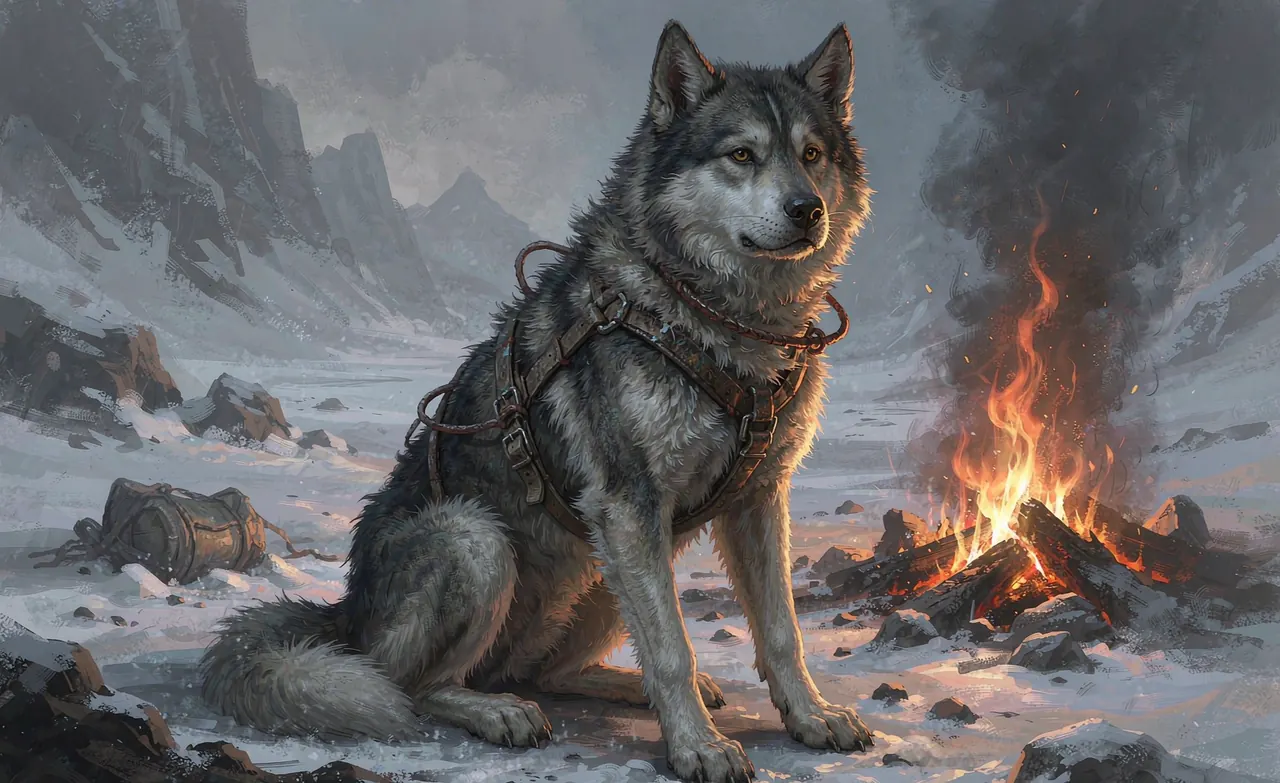
Six questions about how you actually play, not how you would like to play. The result is one of four archetypes — and, more usefully, the role you should take in a 1–4 player group. Your result is encoded in the URL, so you can post it and argue about it.
You spawn into a whiteout with nothing. First move?
Your pack is full and something valuable is on the ground.
Night falls and the temperature drops hard.
You find a working generator.
Three other players join your run. You take the job that…
The run goes wrong. What actually ended it?
The four archetypes
All four results, written out — so the page is useful whether or not you take the quiz.
The Scavenger
You treat the frozen city as a warehouse that happens to be cold.
Scavengers win by converting salvage into progress faster than the cold converts progress into corpses. Your bottleneck is never opportunity — it is always weight and decisions. The single habit that separates good Scavengers from dead ones is knowing your drop threshold before you pick something up.
- Highest salvage-per-hour of any playstyle
- Turns ruined areas other players skip into profit
- Keeps a 4-player group supplied on their own
Watch out: Greed. Every Scavenger run ends the same way — one more building. Set a weight limit and honour it.
In co-op: Best paired with a Pathfinder who routes you between dense salvage sites instead of wandering.
The Builder
You do not survive the winter — you outlast it behind a door you fixed.
Builders convert today's salvage into tomorrow's safety margin. Permafrost lets you repair abandoned shelters or raise your own, and the difference between the two is whether you are spending time or spending materials. Your job is turning a cold stop into a warm one — and a warm stop is what makes every other playstyle viable.
- Only playstyle that compounds — a finished base pays out forever
- Makes the group immune to bad weather RNG
- Controls where the group respawns from, literally
Watch out: Over-building. A base that is never finished is worse than a lean-to that is.
In co-op: You are the anchor. Pair with a Hunter who brings in the hides your insulation depends on.
The Hunter
Every threat in the snow is also a resource. You just have to get there first.
Hunters are the only playstyle that converts danger into supplies. Wildlife and hostile survivors are both material sources — hides, food, and territory. The cost is that you operate furthest from safety, which makes the dog companion less a pet and more a piece of equipment: it scouts, it alarms, and it carries.
- Converts threats into hides and food rather than just avoiding them
- Unlocks insulation tiers the other playstyles have to trade for
- Holds territory so the Builder can work in peace
Watch out: Distance. You die further from a fire than anyone else. Always know which shelter is closest.
In co-op: Essential in a 4-stack. Feed a Builder and the whole group stops freezing.
The Pathfinder
You are never lost, which means you are never late, which means you are never dead.
Pathfinders win on information. In a game where exposure is a timer, knowing the route is worth more than any single piece of gear. You are the reason a group finishes a salvage loop with minutes to spare instead of freezing halfway home — and the reason nobody wastes a day walking to somewhere already stripped.
- Removes the single biggest run-ender: not knowing where you are
- Turns repeated trips into a reliable circuit
- Finds the biomes worth farming before anyone else does
Watch out: Analysis as avoidance. Mapping is only useful if someone then walks the route.
In co-op: You make the other three efficient. Lead a Scavenger and your group clears twice the ground.
Data version 2026.09.24 · reviewed 24 September 2026.